Ground-Mount Solar Construction: Progress and Quality Control from Procurement to Commissioning
Constructioneyerod · · 7 min read
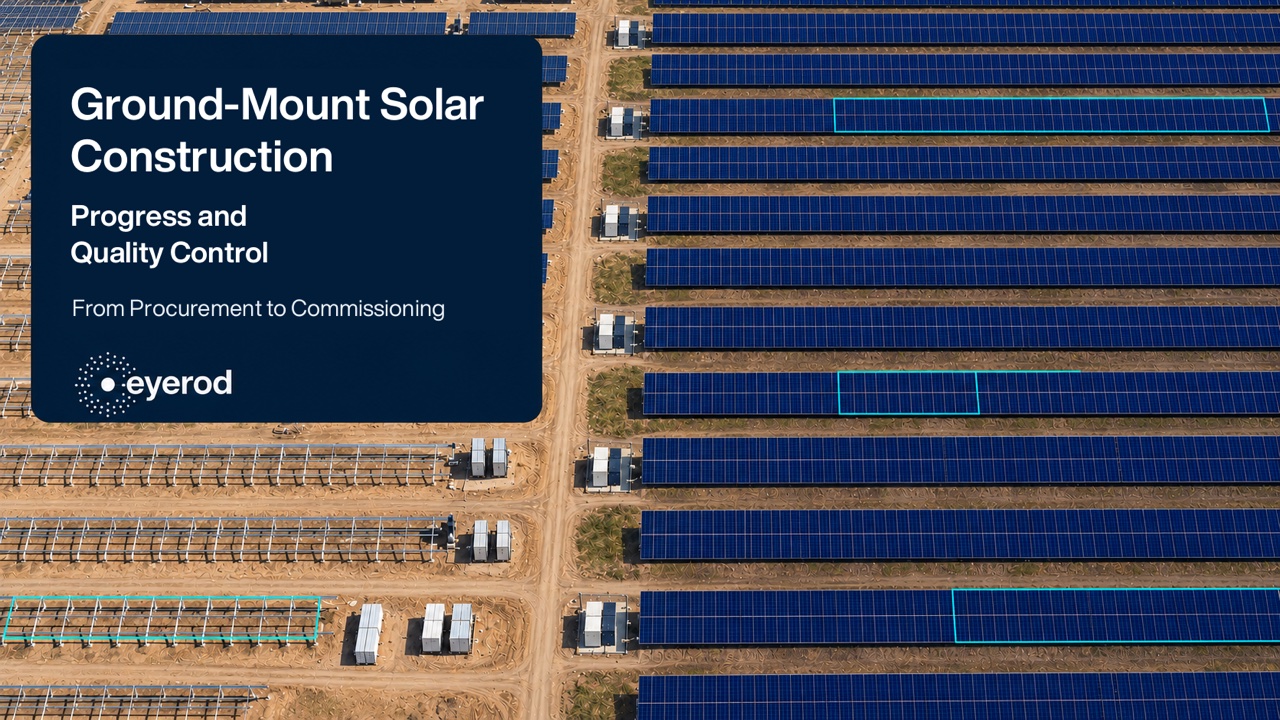
On a ground-mount solar project, the procurement, construction and operations teams each produce different records for the same plant. The module inspection at the factory, the installation record on site and the commissioning tests all come from different stages. When this information stays disconnected, the next team may have to investigate again what the previous one already did.
Planning progress tracking and quality control together makes these handovers more orderly. The investor can see which work is complete, the EPC team which checks remain open, and the operations team the history of the equipment it takes over.
This guide covers which records a ground-mount solar build should produce and how they can carry over from procurement into operations.
How is a ground-mount solar construction process tracked?
A ground-mount solar construction process is tracked by matching each activity in the schedule to an output and a record that can be verified on site. Tracking piles, mounting structures and module installation separately shows which stage the progress has actually reached.
Permitting, grid connection and acceptance steps depend on the country and on the project’s licensing regime. In Turkey, for example, the application and connection framework for unlicensed projects is published in EPDK’s unlicensed generation resources, while licensed projects are assessed under their own licensing, connection and authorization conditions.
Independently of any official application sequence, the following stages can be used to organize the technical records:
| Stage | What to track | Record to produce |
|---|---|---|
| Project preparation | Work items, site zones and control points | Current plan and control responsibilities |
| Procurement | Equipment identity and quality documents | Delivery, serial number and inspection records |
| Site execution | Completed work and open items | Dated, located progress records |
| Testing and commissioning | Checks, test results and deficiencies | Measurement results and closure evidence |
| Acceptance and transition to operations | As-installed state and handover scope | Acceptance documents and the operations file |
1. Define the control scope before construction starts
For solar site tracking to work, it has to be clear from the start which work is verified, by what method and by whom.
The quantity of installed modules, for example, can be assessed from drone imagery. Connection torque, cable terminations and electrical compliance require different field checks. Combining them under a single completion percentage can obscure the state of the project.
The following should be settled during preparation:
- The scope and completion criteria of each work item.
- Tracking units such as blocks, tables or site zones.
- The current design revision.
- The control method and the responsible team.
- How often the records are updated.
Proposals and contracts should also state the scope of data delivery: not only that a report will be prepared, but which work it will cover and how findings will be tied to locations.
2. Record module quality and equipment identity during procurement
Solar quality control starts before panels are placed on site. Matching the manufacturer, model, serial number and quality records creates traceability for later inspections.
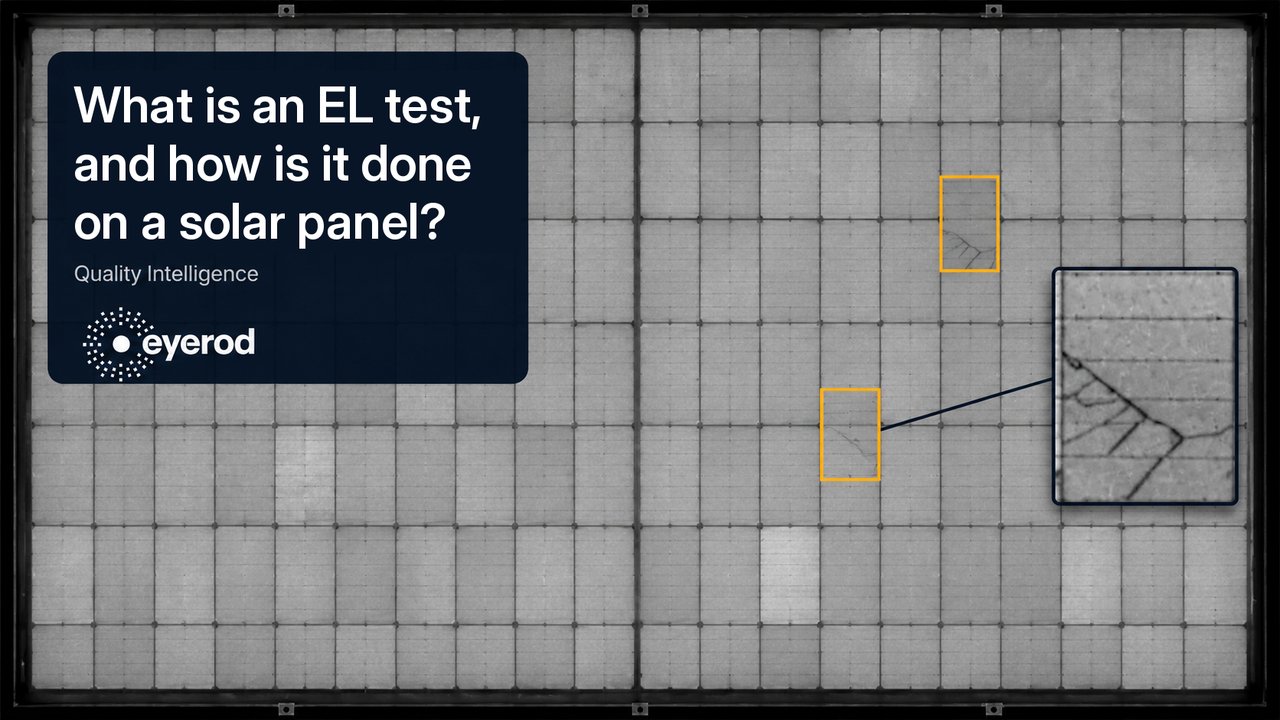
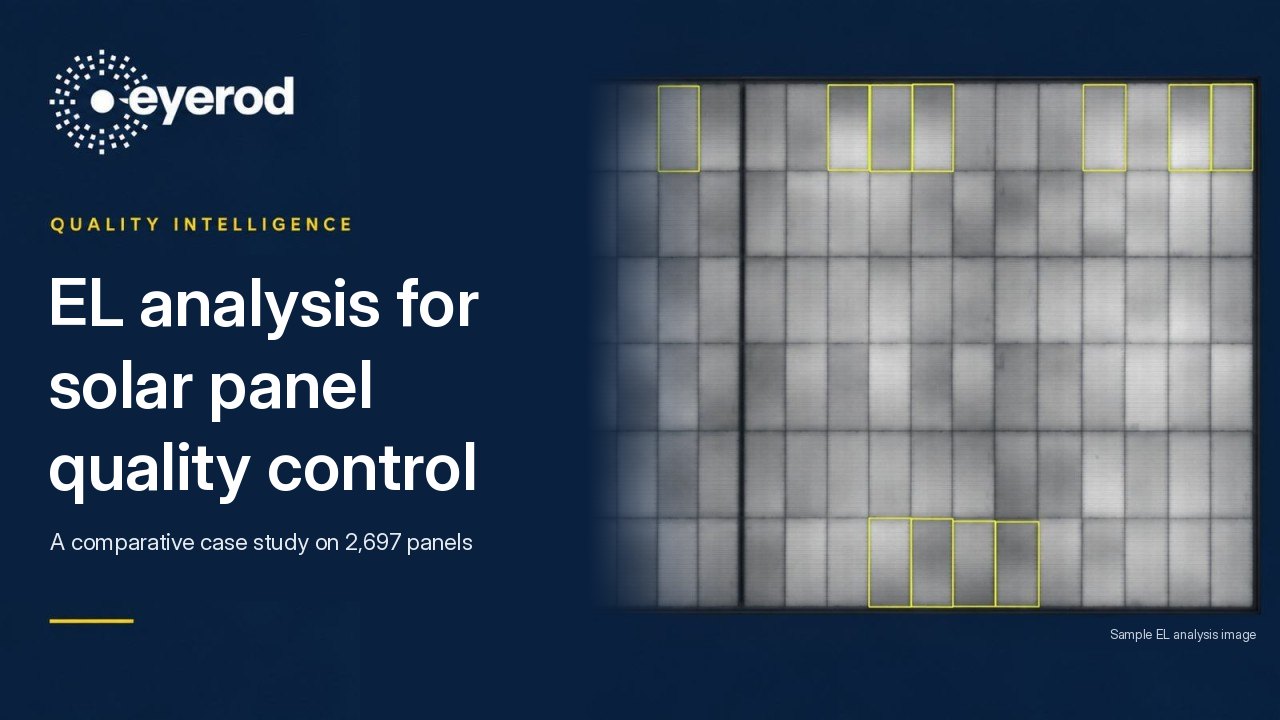
Electroluminescence (EL) images taken at the factory can be used to assess findings such as cell cracks and certain interconnection defects. IEC TS 60904-13 defines methods for capturing, processing and interpreting EL images of PV modules. The project’s acceptance or rejection criteria are evaluated alongside the relevant technical specification and contract.
eyerod Quality Intelligence analyzes factory EL images with AI and classifies defects module by module. Matching findings to the relevant module record makes it easier to identify the equipment that needs review.
We cover how a finding in an image differs from an acceptance decision in EL image analysis in PV module quality control.
3. Track site progress by quantity and location
An overall completion rate does not by itself show how the work is distributed across the site. The same amount of work finished in different zones can affect how the next activities are planned.
A progress record should answer three questions: What was done, where was it done, and on what date was it recorded?
eyerod Construction Intelligence tracks visible work by quantity and location from drone imagery. Comparing site records from different dates shows where progress has been made.
In one zone, for example, module installation may be advancing while the mounting structure in the next zone is not yet complete. This distinction helps teams plan the next activities and field checks.
Installation visible in an image does not mean the electrical connections or tests are complete. Visual progress and technical control results should therefore be kept separate.
For data capture and comparison methods, see how to track solar construction progress with drones.
4. Link quality control to open items and closure records
The fact that work has been carried out does not by itself confirm that it meets the technical requirements. Progress tracking and quality control should be linked within the same project but recorded as different states.
| Record | Question it answers |
|---|---|
| Progress record | How much work was completed in which zone? |
| Inspection or test record | By what method was the work assessed? |
| Non-conformance record | Which condition was not met? |
| Closure record | How was the correction verified, and by whom? |
An Inspection and Test Plan (ITP) defines which check takes place at which stage. A punch list organizes the open items that have to be tracked and closed.
eyerod’s map-based Punch List & ITP feature lets teams review these records at the relevant location on site, seeing where an open item is and which check it relates to in the same site context.
For more on this workflow, see punch lists and ITPs.
5. Complete the test, commissioning and acceptance records
Commissioning preparation brings together visual checks, electrical tests and documentation. The test scope is set by the system design and the applicable technical requirements, and results are recorded against the relevant circuit or equipment.
IEC 62446-1 covers handover documentation, commissioning tests and inspection criteria for grid-connected PV systems. It offers a technical basis for assessing the installation and passing the results to the customer. It does not replace official acceptance.
Deficiencies found during testing should be followed through correction and re-inspection records. The commissioning file should make clear which check was performed, its result and which points remain open.
Official project approval and acceptance procedures vary by country and project type, so the competent authority and current process should be confirmed for each project.
The file handed to the operations team should contain:
- Current drawings showing the plant as actually built.
- Equipment lists and serial numbers.
- Test results and acceptance documents.
- The status and owners of open items.
- Warranty documents and maintenance instructions.
How differences between the design and the completed work are carried into the handover file is explained in solar as-built and design-to-site comparison.
What does thermal inspection add after commissioning?
With the move to operations, the focus shifts from construction progress to equipment condition and performance. IEC 62446-2 covers preventive, corrective and performance-related maintenance for photovoltaic systems.
Thermal images collected under suitable conditions can reveal temperature patterns on modules that warrant inspection. Tying findings to locations helps field teams decide which points to check.
Capture conditions and reporting methods affect how results are interpreted. IEC TS 62446-3 defines these requirements for outdoor PV thermography. A thermal finding does not on its own confirm an electrical root cause.
eyerod Asset Intelligence links thermal analysis findings to the relevant asset and location records on the digital twin, so a new inspection can be evaluated together with earlier site records.
For measurement conditions, see how drone thermal inspection works. For how repeated records are used over time, see periodic thermal records in a solar maintenance plan.
Site data from procurement to operations with eyerod
On a ground-mount solar project, quality, progress and operations records answer different questions. Keeping them distinct lets teams assess both what has been completed and which checks remain open.
eyerod brings together module quality analysis with Quality Intelligence, construction progress with Construction Intelligence, and asset inspections during operations with Asset Intelligence.
To see how these records can be managed on your project, request an eyerod demo.
Frequently asked questions
Can drone imagery confirm that a solar installation is complete?
It can assess the quantity and location of visible work. Electrical connections, technical compliance, tests and official acceptance status each require their own records.
Do EL analysis and thermal inspection do the same job?
No. EL images are used to assess defects inside the cells. Thermal inspection examines temperature patterns. Their purposes and data collection methods differ.
When should solar construction tracking start?
Tracking units, control points and responsibilities should be defined before site execution begins, so comparable records exist from the first piece of work.
Does a progress report replace an acceptance document?
No. A progress report shows the work completed. Technical tests, compliance assessment and official acceptance run through their own processes.
What Is an EL Test and How Is It Done on a Solar Panel?